Saturday, 22 January 2022

Please do ready novel, comment and vote

 Hello there, hope you are doing great!!

If you have time, then please do check my two stories on going on Wattpad . . .


It would really a lot to me. Votes and comments are highly appreciated!!


Thank you


https://www.wattpad.com/story/298801233?utm_source=android&utm_medium=link&utm_content=story_info&wp_page=story_details_button&wp_uname=Sun_writer84&wp_originator=A%2FsgOlMHrwwvurhzvG9BgH3lyw%2FioCyIrJpCPCEkUHsB2DOyZnf37fQaPGJ6C93tNo989K8ckni%2BfAUcxQuXt3F9yn2BGK81cEwNAtQWL2afwtaqZRmim3b0YeRhXDg7

Tuesday, 18 January 2022

10 Debut Novels That Are Also Their Authors’ Masterpieces


the creation of adam snapshot

Over one hundred and sixty years ago, Gustave Flaubert’s Madame Bovary was published for the first time as a single volume—it had been serialized the year before in La Revue de Paris from October through December—and it quickly became a bestseller. Obscenity trials will do that for you! Also luminous, genre-creating novels, of course. I suppose. Though Flaubert would go on to write several more books, including the well-regarded Sentimental Education, he would never top his initial effort—Madame Bovary is universally acknowledged as Flaubert’s masterpiece, and indeed as one of the greatest novels ever written. Which I probably don’t have to tell you is some feat for a debut novelist. To celebrate this seminal novel, I’ve put together a list of debut novels that also happen to be their author’s masterpieces—or at least are often considered to be such. NB: a writer must have published more than one book to be on this list—a one-hit-wonder is no doubt also a debut, but it doesn’t exactly suit the spirit of the list (same goes for writers who technically published more than one book, but maybe shouldn’t have—like Harper Lee). It will also skew historical, because lots of stellar young writers still have their masterpieces in them—or so we hope.


Gustave Flaubert, Madame Bovary

Roundly considered Flaubert’s masterpiece, as well as a masterpiece of realist fiction in general. But it wasn’t as though Flaubert wrote it completely from the (writerly) womb. As Benjamin Lytal noted in The New Yorker, he first completed a play entitled The Temptation of St. Anthony—which his friends promptly urged him to burn. It was, of course, eventually published after decades of work—and still, no one remembers it. Who could be expected to, what with Emma Bovary’s color-shifting eyes winking balefully from the other end of the shelf?


Screen Shot 2022-01-05 at 4.53.34 PM.png

Donna Tartt, The Secret History

It’s true: Donna Tartt has lots of writing years left. But though I fully expect she’ll put out another bestseller every decade until she dies (one can’t hope for her immortality; it’s tempting, but knowing her, she’d end up a Tithonian cicada, and I wouldn’t wish her such an ignoble fate), it will be tough to topple The Secret History—which by the way, she published before she was 30—as her masterpiece (and my own personal forever favorite novel, if that counts for anything). On the other hand, my mother prefers The Little Friend. So I suppose we’ll have to wait and see.


Richard Wright, Native Son

Native Son was Wright’s second book, published after Uncle Tom’s Children, a collection of novellas, but the story of Bigger Thomas was his first proper novel and is still his most famous work. As far as the term “masterpiece” goes, that should be self explanatory, but when James Baldwin writes “No American Negro exists who does not have his private Bigger Thomas living in his skull”—well then you kind of know.


Screen Shot 2022-01-05 at 4.53.51 PM.png

Renata Adler, Speedboat

This is something of a cheat, because it’s such a cult classic and because Adler published only two novels—she’s equally, if not more, significant for her nonfiction and criticism. But whatever, because I love this novel, and despite the fact that Adler supposedly prefers Pitch Dark, Speedboat is both a masterpiece and hers—ask anyone.


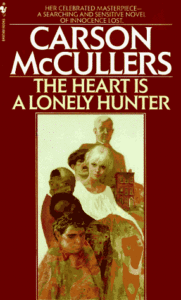
Carson McCullers, The Heart is a Lonely Hunter

McCullers was only 23 when her debut novel was published in 1940, and it was a sensational bestseller that year—since then, it’s been a major touchstone of Southern Gothic literature. To be quite fair, some cite her 1946 novel The Member of the Wedding as her masterpiece, and others prefer Reflections in a Golden Eye, but this only goes to show how truly great she is—and, since those people are wrong, how truly great The Heart is a Lonely Hunter is, too.


Screen Shot 2022-01-05 at 4.54.06 PM.png

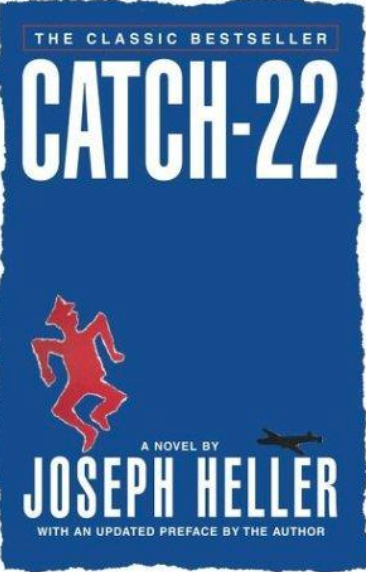
Joseph Heller, Catch-22

Imagine coining a now-ubiquitous term with your debut novel. Or hell, imagine having your debut novel be consistently listed as one of the funniest novels ever written—not to mention one of the finest literary works of the 20th century. Apparently, Heller wasn’t even trying to write a novel at the beginning—he thought of a few lines spontaneously, wrote about a third of it, and sent it off to publishers. $1,500 and some eight years later, it was a hit.


Chinua Achebe, Things Fall Apart

Achebe’s Things Fall Apart was arguably the first African novel to enter the Western canon, and it’s still ubiquitous in high schools all across America. It’s definitely Achebe’s most famous and widely read work, and Dwight Garner has officially called it the writer’s masterpiece (“accessible but stinging, its layers peeling over the course of multiple readings”) so I’ll consider that case closed.


Screen Shot 2022-01-05 at 4.54.21 PM.png

Charlotte Brontë, Jane Eyre

Perhaps it’s because Jane Eyre is actually the second novel Charlotte Brontë wrote (her first attempt, The Professor, did not secure a publisher until later), but this is one of the most assured debuts I’ve ever read—and was erotic enough to send Victorian readers into a tizzy. (Then again, what wasn’t?) Some may claimVillette as Brontë’s true masterpiece, but the fact that Jane Eyre could inspire a response novel that is as much of a classic as the original text proves its enduring importance.


Screen Shot 2022-01-05 at 4.54.28 PM.png

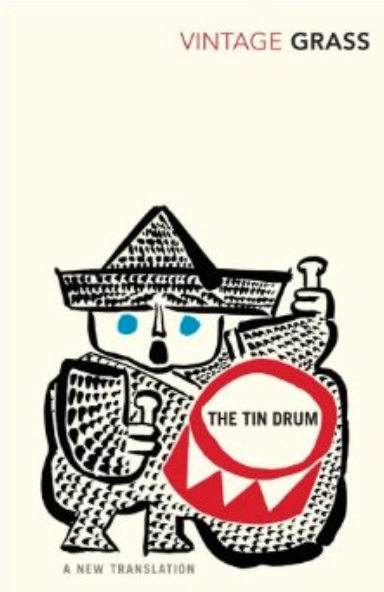
Günter Grass, The Tin Drum

The Tin Drum is by far Grass’s best known work, and certainly his masterpiece—though not his only great book, as Salman Rushdie pointed out in The New Yorker: “If Grass had never written that novel, his other books were enough to earn him the accolades I was giving him, and the fact that he had written The Tin Drum as well placed him among the immortals.” Upon its publication in English, the review in the New York Times cited its reception in Europe as “as a great, wonderful and comic masterpiece” but doubted very much whether American readers would appreciate it—in part because “it is very German.” Well he may not be as much of a household name here as elsewhere, but we still know a masterpiece when we see it.


Screen Shot 2022-01-05 at 4.54.35 PM.png

Dorothy Allison, Bastard Out of Carolina

An argument for writing what you know: Allison’s semi-autobiographical debut, which at least one critic called a “world-altering masterpiece,” has been an influence on countless writers since its publication in 1992. The world is better because this book is in it.

Sunday, 16 January 2022

These 7 countries have 0 cases of COVID

 How are they doing it?

Cook Islands

cook islands no covid 19 cases

This south Pacific island country has remained closed to the world till now, but is expected to open its borders to New Zealanders on 13 January. The news comes as almost 97 per cent of its eligible population of 17,459 has achieved double vaccination.

Its vaccination policy states that citizens aged 12 years or older are eligible for the first two doses of vaccine. Those aged 18+ can get a third booster shot as well.

North Korea

north korea zero covid 19 cases

North Korea, which is not very inviting to outsiders at the best of times, has kept its borders shut to travellers as well as imports of food and other goods. Recently, travel between cities has been put under stricter rules with commuters requiring vaccination or business certificates for the same. The country is notoriously opaque with data and it’s not impossible that 0 cases of COVID could well be a case of managing the numbers.

Its vaccination policy remains undeveloped as the country with a zero covid response has continually rejected offers of vaccines being imported into the country as well.

Kiribati

kiribati zero covid 19 cases

This island nation in the central Pacific has kept its borders shut to travellers since the onset of COVID-19.

Its vaccine roll out remains slow, as only 11,686 citizens out of the almost 1.2 lakh have been fully vaccinated.

Nauru

nauru zero covid 19 cases

Travel guidelines to this country in Oceania have been updated to allow fully vaccinated travellers with effect from 31 December 2021. The passengers should carry a negative RT-PCR test report and go through quarantine rules as per the advisory.

Its vaccination policy allows citizens aged 18 years and above to be jabbed. The country, with a population of 10,834 reported 100 per cent vaccination last year.

Turkmenistan

turkmenistan zero covid cases

Turkmenistan in Central Asia has kept its borders closed except for repatriation flights coming in. Citizens of the country returning home are expected to be fully vaccinated and negative of the coronavirus. The country says it has had zero cases of COVID-19 so far, but medical experts, including some in the WHO, have serious doubts about this claim. Some put it down to the “extremely repressive, autocratic nature of the government,” which “has a long history of suppressing data and a long history of punishing people who expose the truth”.

Its vaccination policy has made double jabs mandatory for all citizens above 18 years of age.

Tuvalu

Tuvalu zero covid 19 cases

All travel is banned and borders are shut in this country in Oceania.

Its vaccination policy was rolled out in April 2021. Since then 12,114 doses have been rolled out in the country.


Pitcairn Islands

pitcairn islands zero covid 19 cases

These islands, which form the British Overseas Territory, will open to international travellers from 31 March 2022 after nearly two years of closure.

This country has achieved 100% vaccination. All 47 people on the islands have taken their jabs.

Thursday, 13 January 2022

India's jobs crisis is more serious than it seems


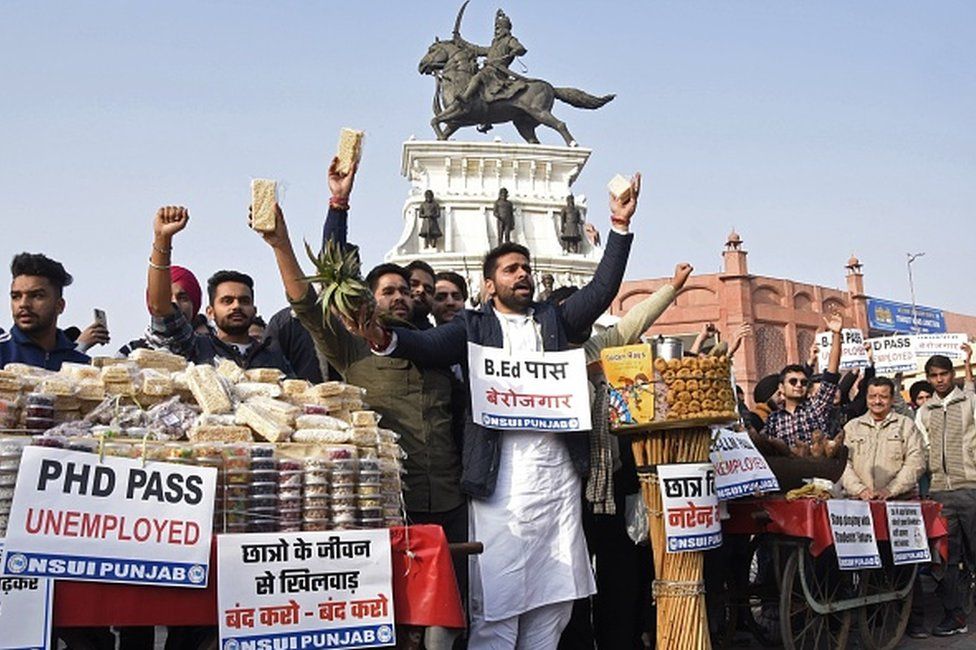
Activists of National Students' Union of India (NSUI) shout slogans against the central government as they enact to sell sweets and fruits during a protest against the rise of unemployment, in Amritsar on January 12, 2021.

Last week, a law graduate in India applied for a job as a driver.

Jitendra Maurya was one of more than 10,000 jobless young people who turned up for interviews for 15 low-skilled government jobs in the central state of Madhya Pradesh. Many of them were overqualified - aspirants, according to one report, included post-graduates, engineers, MBAs and people like Mr Maurya, who is preparing for a judge's exam.

"The situation is such that sometimes there is no money to buy books. So I thought I will get some work [here]," he told a news network.

Mr Maurya's plight shines a light on the acute jobs crisis facing India. The pandemic battered Asia's third-largest economy, which was already in the throes of a prolonged slowdown. It's now seeing a rebound largely due to pent-up demand and increased government spending.

But jobs are diminishing. India's unemployment rate crept up to nearly 8% in December, according to the Centre for Monitoring Indian Economy (CMIE), an independent think tank. It was more than 7% in 2020 and for most of 2021.

"This is way higher than anything seen in India, at least over the last three decades, including the big [economic] crisis of 1991 [when the country did not have enough dollars to pay for imports]," Kaushik Basu, former chief economist of the World Bank, told me.

Most countries saw joblessness rise in 2020. But India's rate exceeded most emerging economies like Bangladesh (5.3%), Mexico (4.7%) and Vietnam (2.3%), notes Prof Basu.

Even salaried jobs have shrunk, according to the CMIE. Part of this could be because firms have used the pandemic to trim their workforce and reduce costs. Studies by Azim Premji University show young workers - 15 to 23 years old - were hardest hit during the 2020 lockdown.

"There was a churn. We found that about half of those who had salaried work before the lockdown could not retain such work," Amit Basole, an economist at the university, told me.

An Indian youth looks through papers as he stands in a queue to apply for a job at a jobs fair in Mumbai on October 12, 2011.

The pandemic is only partly responsible for the sharp decline in jobs, economists say.

"What has happened in India reflects the fact that policy is being made with little attention to the wellbeing of workers and small businesses, as we saw during the lockdown in 2020," Prof Basu said.

For one, these dismal headline numbers don't tell us the whole story about persistent joblessness in India.

The number of active job seekers in the working age population has fallen. The proportion of women, aged 15 and older, in the workforce is among the lowest in the world.

But unemployment in India mainly refers to educated young people looking for jobs in the formal economy - although the informal economy employs 90% of the workforce and generates half the economic output.

"Unemployment is a luxury which the educated, relatively well-off can afford. Not the poor, unskilled or semi-skilled people," said Radhicka Kapoor, a labour economist.

The more educated the person is, the more likely it is they'll remain jobless and unwilling to take up a low-paying informal job. On the other hand, the poor who have little access to education are compelled to take up whatever work comes their way.

So, unemployment numbers don't reveal much about the total supply of workers in the economy as a whole.

Three-quarters of India's workforce is self employed and casual, with no social security benefits.

India delivery boyImage source, Getty Images
Image caption,
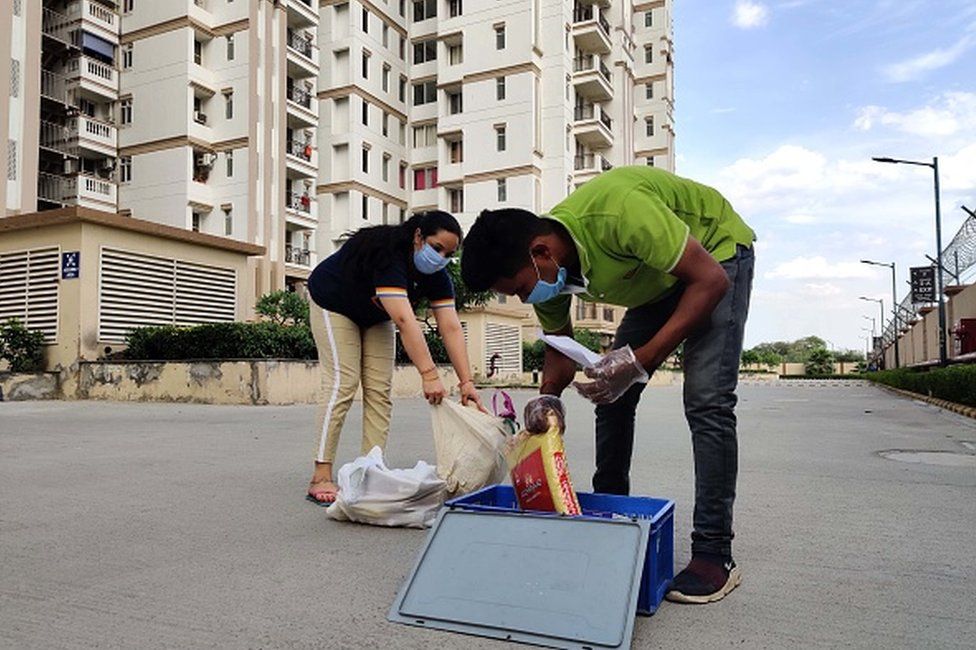
An overwhelming majority of jobs in India are informal

Only a little over 2% of the workforce have secure formal jobs with access to social security - a retirement savings scheme, health care, maternity benefits - and written contracts of more than three years. A paltry 9% have formal jobs with access to at least one social security source.

"The majority of India's workforce is vulnerable and leads a precarious existence," Dr Kapoor said.

Earnings are slim. Surveys show 45% of all salaried workers earn less than 9,750 rupees ($130; £96) a month. That's less than 375 rupees a day, the minimum wage proposed in 2019 but later dropped.

One reason behind India's endemic unemployment despite high growth is the country's leapfrogging from a primarily farm economy to a booming services economy - in no other country of India's size has growth been led by services and not manufacturing. India's growth has been powered by high-end services like software and finance manned by highly skilled workers. There have been few manufacturing or factory jobs that can absorb a large number of unskilled or low-skilled workers.

India's joblessness is worrying because even as the country's growth is restarting, the bottom segment is doing worse than in most other nations, Prof Basu says. He believes the government needs to control inflation, generate employment and support workers. Also, a "politics of polarisation and hate" during Mr Modi's rule is "damaging trust, which is one of the most important underlying drivers of economic development".

Mr Modi, who swept to power in 2014 promising jobs aplenty, is offering financial incentives to key industries and running an ambitious "Make in India" campaign to encourage local manufacturing. None of this has so far led to a manufacturing - and jobs - boom, in part due to depressed demand.

In the short term, many like Dr Basole feel India urgently needs cash transfers or an employment guarantee scheme for the bottom 20% of struggling households in cities to help them consume and pay back debt. In the long run, the challenge is to ensure that all workers have a basic minimum wage and social security.

"Until then we cannot have any meaningful reforms in jobs," Dr Kapoor said.

Wednesday, 12 January 2022

4 plant-based foods to eat every week


As a laureate professor in nutrition and dietetics people often ask – what do you eat?

Plant-based foods are good sources of healthy nutrients. These include different types of dietary fibre, vitamins, minerals, and a range of “phytonutrients”, which plants produce to help them grow or protect them from pathogens and pests.

A review of research published in May 2021 looked at 12 studies with more than 500,000 people who were followed for up to 25 years. It found those who ate the most plant foods were less likely to die from any cause over follow-up time periods that varied across the studies from five to 25 years, compared to those who ate the least.

Here are four versatile and tasty plant foods I have on my weekly grocery list, and the research showing why they’re good for you.


Read more: Plant-rich diets may help prevent depression – new evidence


1. Tomatoes

Tomatoes are a berry fruit (not a vegetable). They’re rich in vitamin C and “lycopene”, which is a carotenoid. Carotenoids are pigments produced by plants and give vegetables their bright colours.

A review of six trials asked people to consume tomato products equivalent to 1-1.5 large tomatoes or 1-1.5 cups of tomato juice daily for about six weeks.

The researchers found people who did this had reduced blood levels of triglycerides (a type of fat in your blood that increases heart disease risk), as well as lower total and “bad” cholesterol levels, compared to those who didn’t have any tomatoes.

These people also had increased levels of “good cholesterol”.


Read more: Love meat too much to be vegetarian? Go 'flexitarian'


Another review of 11 studies tested the effect of tomatoes and lycopene on blood pressure.

Researchers found consuming any tomato products led to a large decrease in systolic blood pressure (the first number that measures the pressure at which the heart pumps blood).

However, there was no effect on the diastolic pressure (the second number which is the pressure in the heart when it relaxes).

In the group who had high blood pressure to begin with, both systolic and diastolic blood pressure decreased after eating tomato products compared to placebos.

Tomatoes
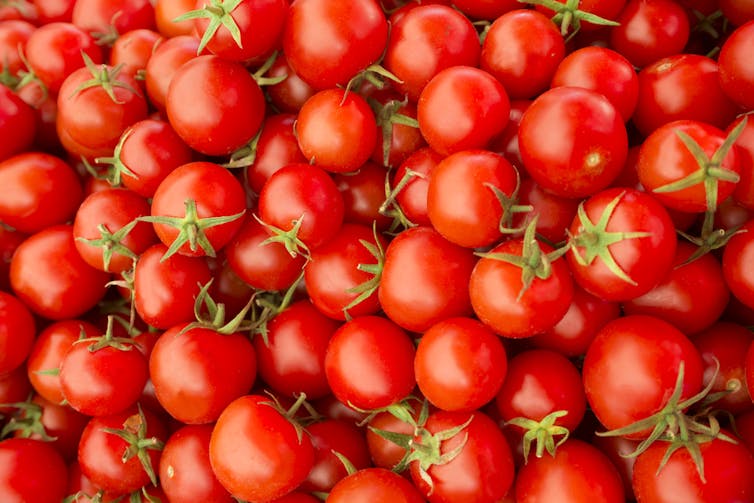
Tomatoes are high in vitamin C and other important healthy nutrients. Shutterstock

A review of studies included a total of 260,000 men and found those with the highest intakes of cooked tomatoes, tomato sauces and tomato-based foods (equivalent to around one cup per week) had a 15-20% lower risk of developing prostate cancer compared to those with the lowest tomato intakes. Keep in mind correlation doesn’t necessarily mean causation, though.

Recipe tips

Keep canned tomatoes in the cupboard and add to pasta sauce, casseroles and soup. Make your own sauce by roasting tomatoes and red capsicum with a splash of olive oil and balsamic vinegar, then puree with a spoon of chilli paste or herbs of your choice. Keep in the fridge.

Try our fast tomato recipes at No Money No Time, a site full of dietary advice and recipes founded by my team at the University of Newcastle.

2. Pumpkin

Pumpkin is rich in beta-carotene, which is also a carotenoid (plant pigment). It gets converted into vitamin A in the body and is used in the production of antibodies that fight infection. It’s also needed to maintain the integrity of cells in eyes, skin, lungs and the gut.

A review of studies that followed people over time looked at associations between what people ate, blood concentrations of beta-carotene and health outcomes.


Read more: Carrots and pumpkin might reduce your risk of cancer, but beware taking them in pill form


People who had the highest intakes of foods rich in beta-carotene (such as pumpkin, carrots, sweet potato and leafy greens) had an 8-19% lower relative risk of having coronary heart disease, stroke, or dying from any cause in studies over 10 years or more compared to those with the lowest intakes.

Recipe tips

Pumpkin soup is a favourite. Try our design-your-own soup recipe.

Heat oven to 180℃, chop the pumpkin into wedges, drizzle with olive oil, roast till golden. Speed it up by microwaving cut pumpkin for a couple of minutes before roasting.

Carrots, pumpkins, sweet potato and other vegetables
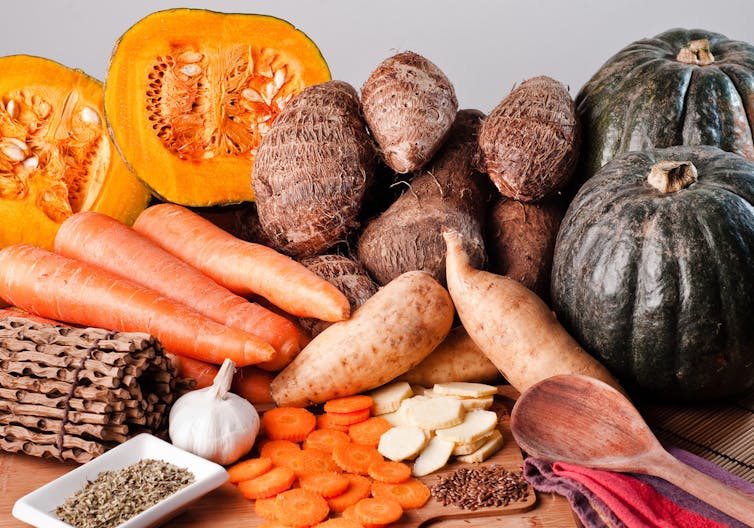
Pumpkins, carrots and sweet potato have high levels of beta-carotene, which has health benefits. Shutterstock

3. Mushrooms

Mushrooms are rich in nutrients with strong antioxidant properties.

The body’s usual processes create oxidative stress, which generates “free radicals”. These are small particles that damage cells walls and cause the cells to die.

If these aren’t neutralised by antioxidants, they can trigger inflammation, contribute to ageing and development of some cancers.


Read more: What are antioxidants? And are they truly good for us?


A review of 17 studies on mushrooms and health found people who ate the most mushrooms had a 34% lower risk of developing any type of cancer compared to those with lowest intakes. For breast cancer, the risk was 35% lower. Though, again, correlation doesn’t necessarily mean causation.

Across the studies, a high mushroom intake was equivalent to eating a button mushroom a day (roughly 18 grams).

Recipe tips

Check out our mushroom and baby spinach stir-fry recipe. It makes a tasty side dish to serve with scrambled or poached eggs on toast.

4. Oats

A review of ten studies tested the effects on blood sugar and insulin levels from eating intact oat kernels, thick rolled oats or quick rolled oats compared to refined grains.

These found eating intact oat kernels and thick rolled oats led to significant reductions in blood glucose and insulin responses, but not after eating quick rolled oats.

This is likely due to the longer time it takes for your body to digest and absorb the less-processed oats. So it’s better to eat whole grain oats, called groats, or rolled oats rather then quick rolled oats.


Read more: Phytonutrients can boost your health. Here are 4 and where to find them (including in your next cup of coffee)


Oats are a good sources of beta-glucan, a soluble fibre shown to help lower blood cholesterol levels.

Across 58 studies where people were fed a special diet containing about 3.5 grams of oat beta-glucan a day, “bad” cholesterol levels were significantly lower compared with control groups.

The impact of oats on blood pressure has been tested in five intervention trials which showed a small, but important, drop in blood pressure.

Recipe tips

You can eat rolled oats for breakfast year round.

Eat them as muesli in summer or porridge in winter, add to meat patties, mix with breadcrumbs for coatings or add to fruit crumble toppings.

10 Plant-Based Protein Foods That Keep You Feeling Full and Energized


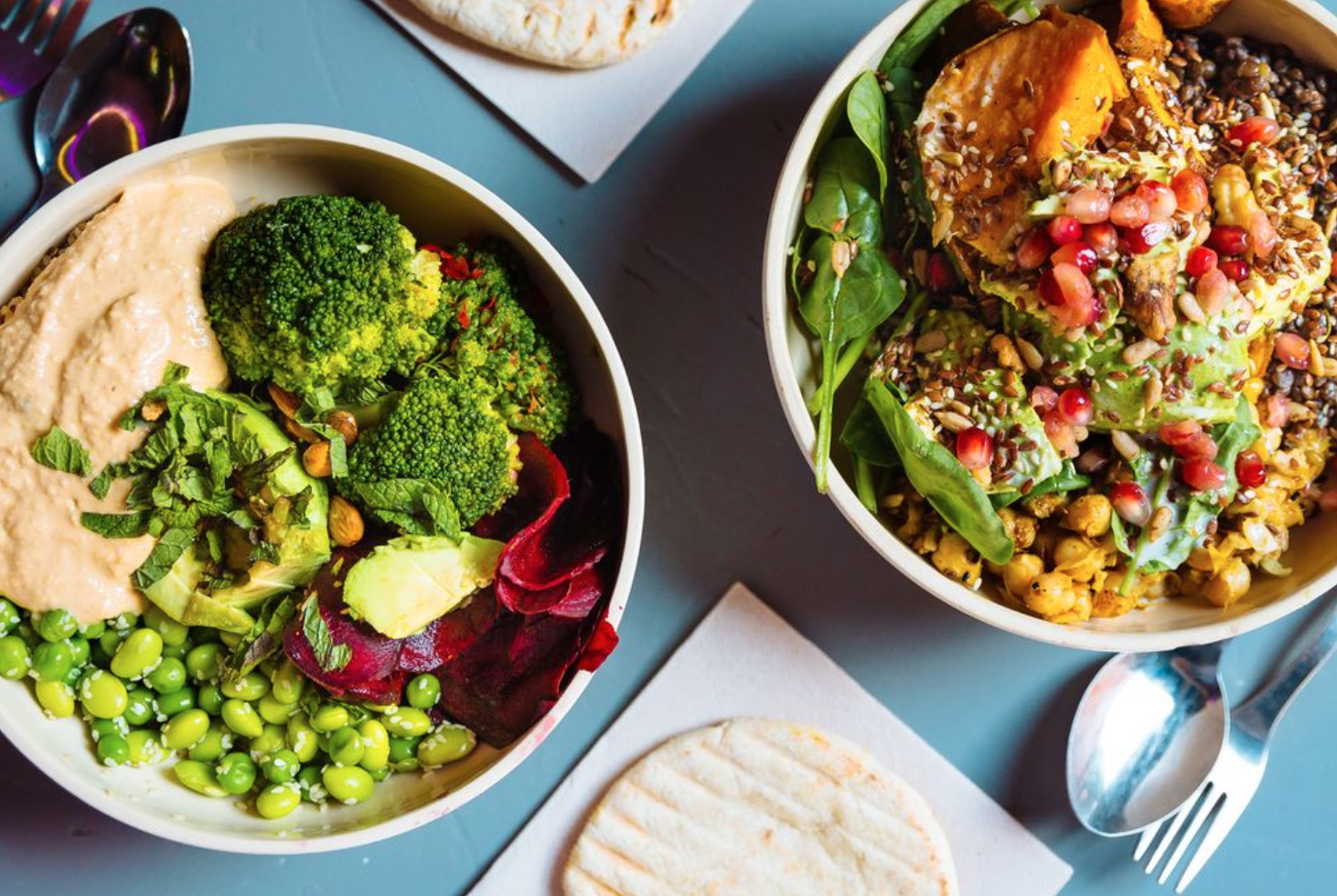
two bowls filled with grains and greens and beans/legumes

More and more runners are transitioning to a plant-based diet. But with this new style of eating comes unique challenges, like figuring out how to choose the right foods to sustain energy and satisfy hunger. Although plant-based foods don’t always have the same amount of calories as their meat counterparts, rest assured that going meatless can—and should—be as filling, energizing, and nutritious as an omnivorous diet.

We chatted with Sarah Schlichter, M.P.H., R.D.N., and Casey Seiden, M.S., R.D., C.D.N., to find out which vegetarian and vegan protein foods will do the trick at filling you up just as much as animal-based options so you can continue to run strong.


What Makes a Plant-Based Food Filling?

There are two nutrients that are known for their ability to help you feel full: fiber and protein. Fiber, a type of carbohydrate, is in an abundance of plant foods, and according to Schlichter, fiber helps you feel fuller longer. Physiologically, fiber takes longer to digest than refined low-fiber carbohydrates, meaning it stays in the stomach longer and contributes to feelings of satiety. In fact, a recent study found that replacing a low-fiber scone with a scone made with resistant starch (a type of fiber) resulted in significantly reduced hunger levels for three hours after consumption.

In addition to fiber, protein plays a major role in overall hunger levels. “Including protein in a snack or postworkout meal can also help with fullness, as protein is more satiating and takes longer to digest than a carbohydrate-based snack alone,” says Schlichter.

Some research suggests that eating protein may communicate to the gastrointestinal tract that it’s time to release certain appetite regulating hormones. Another study indicates that the perceived sensory experience of eating protein, specifically a creamy beverage as compared to juice, plays a role in feeling full. Regardless of the physiological mechanism, the evidence is clear that eating protein will help keep you full—and there are a ton of plant-based protein options to do just that.

For plant-based runners, the timing of meals also plays a major role in hunger levels. “From my own personal experience, a postworkout meal definitely helps to satisfy hunger after a long run, if built properly,” Seiden says. “The base of a recovery meal should have a 3:1 carbohydrate-to-protein ratio with some added healthy fats, which are digested slowly and provide sustained satisfaction for your hunger,” she says.

As a matter of fact, some studies conclude that unsaturated fats cause the body to release more satiety hormones, leading to feelings of fullness.


What Plant-Based Foods Will Keep You Full?

If you’re new to plant-based eating or are just looking to switch up your routine, these 10 foods will keep you feeling satisfied and energized.

1. Potatoes

Not only are potatoes affordable, delicious, and easy to cook, they are also filling and serve as a prerun starchy fuel. One medium potato has 16 percent of your daily fiber, with most of it found in the skin. Schlichter is a fan of sweet potatoes, which contain the antioxidant beta-carotene that gives the spud its orange color. “When paired with a protein source, such as soy, legumes, or nuts, sweet potatoes are a filling and nutrient-dense snack or meal,” Schlichter says.

2. Oats

A half cup of oats has 15 percent the daily value of fiber, plus 5 grams of plant-based protein. Of note, oats contain a special fiber called beta-glucan, which has been shown to have positive effects on satiety with the special bonus of lowering blood cholesterol. According to Seiden, “oats provide an excellent source of carbohydrate to fuel your runs, and the soluble fiber really helps you feel full and satisfied.” She suggests making overnight oats for busy mornings with soy or almond milk and extra seeds and nuts for a protein boost.

3. Chickpeas

This legume packs a ton of nutrients into a tiny package. A half cup of canned chickpeas has 22 percent of the daily value of fiber and 6 grams of protein. Seiden recommends roasted crunchy chickpeas for a quick and nutritious postrun snack. “Not only are they delicious, but they contain a mix of carbs and protein, and usually a little bit of salt to help replace sodium you may have lost through sweating,” she says. Just toss in olive oil, salt, and pepper and roast at 400 degrees for 20 to 30 minutes.

4. Walnuts

Walnuts are a satisfying plant-based food with 4 grams of protein, 2 grams of fiber, and plenty of omega-3 fatty acids. One study explored the possible connections between walnut consumption and central nervous system responses and found that consuming walnuts may activate an area in the brain associated with controlling hunger and cravings. Walnut crumbles make a simple plant-based meat alternative—just put them in the food processor and pulse, then substitute walnut “meat” into any recipe that calls for ground meat.

5. Brussels Sprouts

This tiny cabbage is having a moment, and rightfully so. Just one cup of Brussels sprouts has 100 percent of your daily vitamin C, 4 grams of protein, and 16 percent of your daily fiber. As a cruciferous veggie, Brussels sprouts can cause gas in some people, so it’s best to eat them after a run rather than before one. You can eat them raw in a salad or roast them in the oven with a dash of olive oil and salt.

6. Avocados

Your favorite guac staple has 20 vitamins and minerals—including monounsaturated fats—and 11 percent of your daily fiber. A recent small study (funded by the Hass Avocado Board) found that participants who included half an avocado in their lunch felt 26 percent more satisfied three hours following the meal, compared to those who ate the same lunch without avocado. For runners who have high mileage in their training plan, an avocado can fill your stomach.

7. Green Peas

This vibrant plant-based protein doesn’t always get the love it deserves. Green peas have 4 grams of protein and 14 percent of your daily fiber in just a half cup, plus they provide plenty of starchy carbs for fuel. Peas have a naturally sweet taste, and they’re both versatile and affordable. Keep a bag in your freezer to add to stir-fries, soups, or dips.

8. Lentils

With 9 grams of protein and 30 percent of your daily fiber needs in just a half cup of lentils, these legumes are a clear-cut plant-based winner. They also contain iron, a nutrient that is lacking on a plant-forward diet. Use lentils in soups, stews, and tacos, or form them into meatballs or veggie burgers.

9. Smoothies

To create a filling plant-based smoothie, utilize fiber-rich fruits and veggies and plant-based protein powder. “Drinking something after a run can be easier and is often quicker than cooking up a whole meal,” Seiden says. She uses the following formula: 1 cup of mixed berries, 1 serving of a plant-based protein powder—or 1/4 cup of nuts of your choice—a handful of spinach, and some type of liquid—either water or a plant-based milk alternative.

10. Tofu

A staple of any plant-based diet, tofu is the soy-based protein that is always on the menu. A 3-ounce serving of tofu has 9 grams of plant-based protein, and it also contains other important nutrients that are hard to come by on a plant-based diet, like calcium and iron. Tofu is easy to throw into practically any dish, from stir-fries to tacos to smoothies. Pro tip: Try silken tofu for blending.


Tuesday, 11 January 2022

How To Promote Your Blog – The Fastest Way To 1000 Visitors Per Day


Today’s post is about that most important ingredient of Blogging Success – HOW TO PROMOTE YOUR BLOG.

I am often asked: ‘If you had to start over online, from scratch – what would you do to promote your blog and build up your traffic again as quickly as possible’

A very good question and one I have been giving quite a bit of thought to recently.

I think most people over-complicate traffic. They’re reading too much into all these techniques and spending all their time making sure their blog looks good.

There’s nothing wrong with having a great blog design or doing SEO the right way. But it is a problem when you’re spending so much time on the technical stuff that you forget your site’s purpose: to provide immense value for your visitors.

Extraordinary content is the key to extraordinary traffic.

So assuming you are starting from scratch or your funds are limited here is my Kick Start Strategy For Bloggers:

How To Get 1000 Visitors To Your New Blog Every Day

Step 1) Create Great Content For Your Blog

The number 1 thing you should focus on to get traffic is, great content. Why? because that’s what attracts people to your website.

When I’m writing an article, I have two things in mind. Firstly, I want to make it as simple for someone to understand as possible. Secondly, I want to make it as beneficial to the reader as possible.

So, with that in mind, how much great content do you need to get 1000 visitors a day.

10 articles getting 100 visitors a day.

20 articles getting 50 visitors a day.

100 articles getting 10 visitors a day.

Looking at these numbers, I would say you were best of focusing on less articles, that bring more traffic.

So how do you go about creating content so good that you can get 1000 visitors a day? Here is step by step what I would do:

Brainstorm and research high traffic keywords.

Great content gets linked to a lot, on both social media and blogs, but only if people can find it in the first place.

Links help you rank high in Google.

But none of this matters if you don’t target your blog post for something people are actually searching for in Google.

That’s where keyword research comes in.

Keyword research is all about finding keywords that get the most searches in Google.

To do this, we use SEMRush. This has to be my favorite tool that I have found this year. It’s far better and more user friendly than any other tool similar to it.

Once you signup for an account (they have a free trial), go to their Keywords Explorer tool and type in the topic you want to write a blog post about. You want to find keywords that have a lot of searches but are not so competitive that you can’t rank for them.

SEMRush will tell you how much traffic a search term is getting and how many backlinks you are likely to need to rank for this search term. It will also tell you who is already ranking for it, how much traffic they are getting and what other keywords they rank for on that page.

This is an important point to remember. Your blog posts won’t just rank for 1 keyword, but perhaps 100’s and in some cases, 1000’s of different keywords.

Write a headline to sell people on your article.

A headline is what attracts people to your blog post.

When we write headlines for our posts, we try to include what they will learn, the benefit from learning it and also why they should learn it from us.

A good example of this is: 10 Headlines Examples That Got Us 10 Million Readers

They will learn the best headlines, to get lots of traffic and they should listen to us because we have been successful at it.

Another example could be: 18 Website Optimization Tips For More Traffic and Higher Conversions

They learn website optimization tips, the benefit being more traffic and higher conversions.

Create a top list article around keywords.

Our readers seem to prefer top list articles much more than any other type of post. I think this is because you know exactly what you are going to get.

Not only do you know what you are going to get but you also know how the content is going to be laid out.

I think this is key to their success because people want to skim content. They don’t want to invest time into reading long posts if they don’t know it’s going to be worth it.

One recommendation I would make is, link out to other websites in your blog posts. When we write articles such as 50 Most Influential People In Blogging, we link to each blogger. When they see the post, they often share it and link to it somewhere on their blog.

As mentioned earlier in this post, the more links a website has pointing to it, the higher it ranks in Google.
Make Sure Your Blog Post Looks Amazing

Optimize readability and proof read your blog posts.

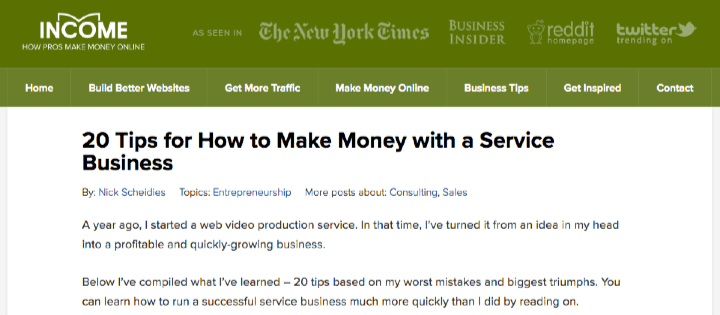
We like to write content in a way that people can come to our site and quickly skim an article and figure out if it’s an article they want to read. I think this is a big part of why so many people read our posts.

Think about it this way, if you go to one of our blog posts and it’s just 2000 words, no paragraphs, no headlines, no images, are you going to invest your time reading it? It’s unlikely you would.

When we create a blog post, we make sure we use images, not just to promote our posts, but to split up the content.

Here is an outline of how we display our blog posts on IncomeDiary:

Main HeadlineIntroductionHeadline 2 (h2 tag)Headline 3 (h3 tag)TextImageHeadline 4 (h3 tag)TextImage

And so on…

Sometimes we include sub-headlines for sub-headlines. It’s important to break up content to make it easy to read.

Step 2) Search Engine Optimization

Now that you have found a good keyword and written a blog post, you need to optimize your post for that keyword.

Optimizing Your Blog Post For a Keyword

Go and download a free Wordpress plugin called Yoast SEO. This plugin will ask you what search term you want your blog post to rank for. Then it will tell you everything you need to do to best rank for it.

Such as:

  • Including keyword in headline
  • Including keyword is meta description
  • Including keyword in first paragraph of post
  • Including internal and external links
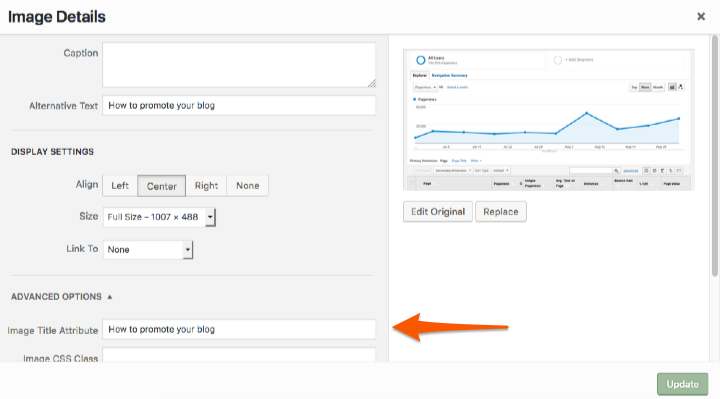
  • Including an image with the name of your keyword
  • Add alt attributes with the focus keyword to your images
  • Mentioning the keyword enough times

Once you have done this, you should be ready to publish your post.
Optimizing Your Website For Search Engines

A big part of how Google decides on where your blog post will rank in it’s search engine is based on how much it likes your website.

Google wants to link to websites that are up to date, user friendly, trustworthy and popular.

Here is a list of ways to achieve this:

  • Have a contact page with address and phone number
  • Get HTTPS in your website URL
  • Add a sitemap to your website
  • Always fix broken links
  • Improve your page speed
  • Make sure you have no duplicated content

Remember, you can optimize your blog posts as much as you like, but if the content isn’t amazing, it’s not going to get linked to, which means it’s not going to rank well in Google.

Related: A Free Copywriting Course – That is BETTER than the BEST ever.

Step 3) Optimize Your Blog Marketing

Now that your blog post is published and it’s optimized for Google, the next important thing I recommend you do, is to make it easy for people to find your content.

You want as many people as possible, all coming to your website at the same time to view your new post. Not just because you want lot’s of traffic but because it gives you a better chance of getting even more traffic.

Think about it this way, if someone sees one person share your article, they often won’t look at it. But if they see 10 people sharing your article, they start to think, WOW, this must be good.

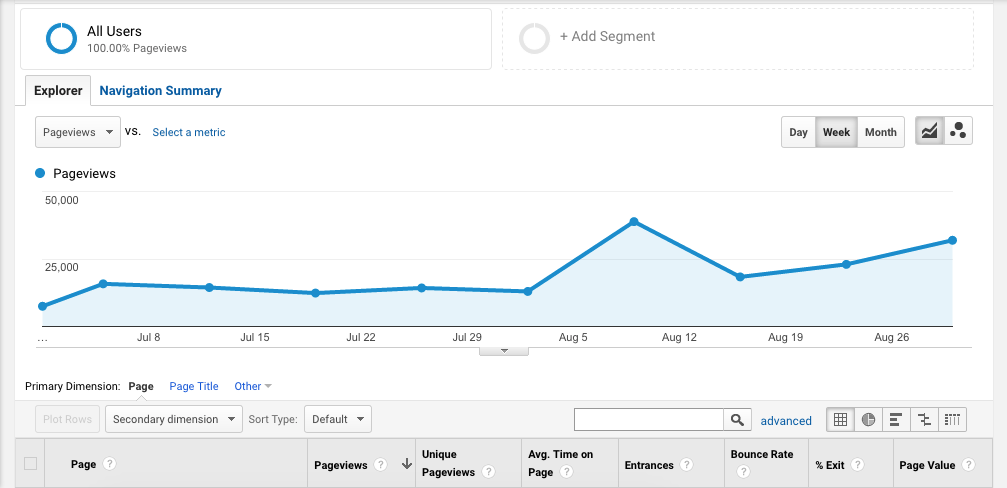
If you’re creating great content, you’re bound to eventually get some big spikes in traffic.

When starting out with a website, we could be getting about 400 visitors a day. Then one day we post an interesting article that does well on social media and it gets about 4,000 visitors that day. That’s 10 times the amount of traffic.

The only problem with spikes in traffic is that they can be gone as quickly as they come. The spike of a successful article goes down after two or three days.

But a good website is designed to turn one-time traffic into recurring traffic. After jumping from 400 visitors a day to 4,000 visitors a day, it goes back down to 600 or 700. That’s a big increase from where it was before.
We turn traffic spikes into long-term traffic by asking people to subscribe to our email list. You’ll notice we have a popup and an opt-in box in the footer of this web page which offer exclusive content for people who subscribe by email. Email is the most direct way to let people know that you’ve published a great new article.

Another way to get first-time visitors to come back to your site is through social media.  These communities bring a consistent social buzz to each new post.

Every time we do a new blog posts, we have all these new fans, all these new people. So every time we do something it’s just going to get bigger, and bigger. That’s real momentum.

Here are my top tips for getting lots of traffic to a brand new blog post:

Email Your Subscribers

Like I just mentioned, one of the best way to instantly get a lot of people to visit your website is to email subscribers.

Every time we email our list about a new post, 1000’s of people visit our site. Some of them share it on social media, some link to it on their blog.

This gets us backlinks to our blog post and gives our search engine optimization a good boost.

This is an important part to the success of any post.

But how do you get email subscribers if your blog is new? Read this post about the 5 best ways to get email subscribers.

Share Your Post On Social Media

Similar to having an email list, you can Tweet/Facebook your article and a whole load of people will visit it. If the article is amazing, people will share it.

We don’t put a lot of effort into building our social media accounts because we know if we write great posts, our readers will do the sharing for us. Having said this, social media has been one of our best traffic sources. One of the reasons for our success with social media is we signed up and started using it way earlier then the majority of other people.

When I launched IncomeDiary, something that was going really well right then was Twitter. Twitter was the in-thing. Everyone was jumping on board.

Since Twitter was new, the make money online niche wasn’t yet saturated.

I was getting huge amounts of traffic — literally 100,000 visitors in a month from Twitter. And I could take advantage of it so easily by just following thousands of Twitter users a day. Thousands of people would come to my profile to see who has followed them and follow me back, click my profile link, my updates, and so on.

With Pinterest, we were able to do the same thing.

We have found that often in business, we are able to achieve huge amounts of success by acting quickly and not waiting to see how things work out. Some bloggers may of looked at Twitter and thought it won’t last and decided not to join until a lot later.

Getting People On Your Blog To Read Your New Posts

This is also an important step in your blog promotion. One of the easiest way to keep website traffic high, is to keep people visiting page after page and coming back to your website. A few ways you can do this:

  • Add a link to your top navigation bar. If people enjoy your content, they will want to look for more.
  • Add a link to the top of your sidebar.
  • Make sure the post is featured on the home and category pages.
  • Make sure the post is featured in related/popular posts.

Ask Friends to Comment and Share (read why)

When I first started blogging, I would often ask friends in the industry to comment and share my posts. Most of them didn’t have any traffic, but that wasn’t important.

What was important, was if I was getting lots of comments and shares, other people coming to the site would be a lot more likely to comment and share.

Remember, it’s about momentum.

The Last Word: Getting Website Traffic is a Marathon, Not a Sprint.

People get excited at the beginning.

They are writing blog posts left, right, and center. But then after a few months, they haven’t made any money and they just give up. That’s why people fail.

Even if you’re doing everything right, it’s unrealistic to expect to have a ton of traffic and income right away. Building large amounts of traffic takes time!

My brother didn’t make any money with Expert Photography the first few months. But he kept at it because he’d seen exactly how long it had taken me to grow my websites in the past. Eventually, he was making $100 per month, then $1000 per month, and now he makes $1000’s a day.